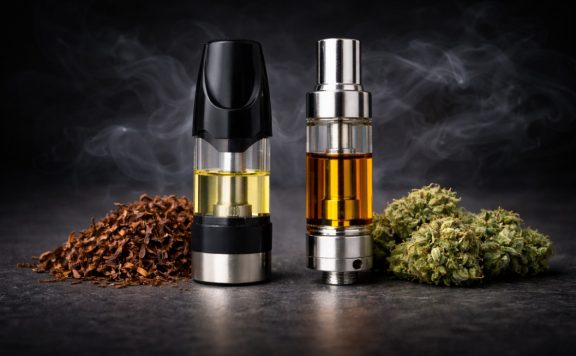
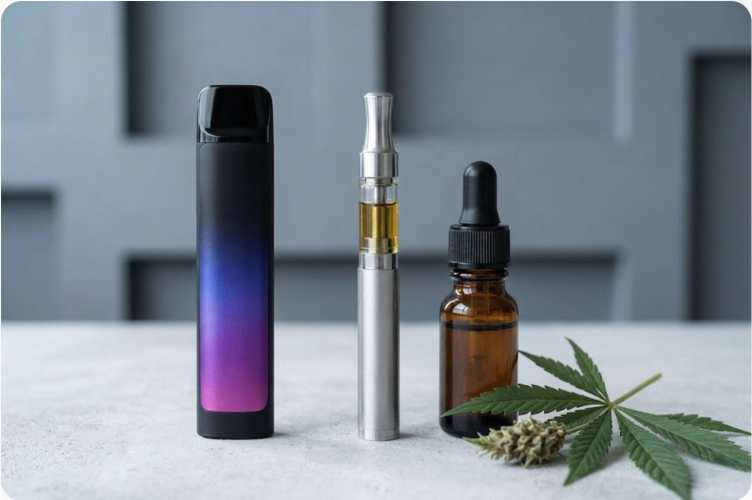
Walk into any vape shop around these days, and you’ll see two worlds collide, seemingly living in the same aisle. Nicotine vapes and CBD vapes are virtually identical from the outside – same futuristic look, same vibrant packaging, same satisfying cloud. But what happens within you, and why are you even holding a vape in the first place? It’s pretty starkly contrasted.
According to a 2025 report by Grand View Research, the global vaping market is projected to exceed 13.06 billion by 2030, with CBD vaping emerging as one of the fastest-growing segments, expanding at a compound annual growth rate of 16.8%. Two products. Two purposes. One massive and rapidly shifting market.
This guide breaks down exactly how nicotine vapes and CBD vapes differ: in effects, flavor profiles, ingredients, and the very different types of people who use them.
What Actually Happens When You Inhale Each One?
The biggest differentiator isn’t necessarily the type of vape you use, but what the compound actually does once it’s in your system. Nicotine gets to the brain about 10 seconds after you inhale, stimulating the release of dopamine and adrenaline (National Institute on Drug Abuse, 2024). CBD, however, binds to endocannabinoid receptors and, once it gets into the brain, doesn’t create an altered state of consciousness.
This all comes from nicotine acting as a stimulant – it speeds up your heart rate, heightens your focus, and can give you a short euphoric high that lingers for about 20–30 minutes before those familiar feelings of withdrawal start returning. Your tolerance to the substance builds, so you need to smoke more and more to get that same high throughout the day.
CBD functions in a different way. It does not stimulate dopamine through that typical reward pathway. Instead, people typically experience a decrease in anxiety, release of muscle tension, and faster sleep initiation, which takes effect in 15-45 minutes and can last from 2-4 hours based on the dose and the individual’s body metabolism, as shared by Project CBD (2025).
When you vape, you get nicotine to your brain in less than 10 seconds. It is one of the quickest forms of nicotine to get you “high”. It is also this quick rush that creates the dependency for nicotine, unlike in CBD vaping, where the World Health Organization reports it does not have a dependency potential.
One is chasing relief from withdrawal. The other is chasing calm.
How Do the Flavor Profiles Actually Differ?
This is where the flavors of each group will really set themselves apart on the shelves – and on the tongue. Nicotine e-liquids have been crafted to be as palatable and varied as possible, creating the most satisfying way to break free of tobacco use. CBD vapes tend to go for more botanical-driven, natural flavorings that accentuate the hemp flavors.
Nicotine vape flavor landscape:
- Candy and dessert flavors: Bubble gum, cotton candy, custard, cake batter
- Fruit blends: mango, watermelon, strawberry kiwi, passion fruit
- Menthol and mint: ice, cool mint, spearmint, Arctic blends
- Tobacco: virginia, Turkish, American tobacco
- Beverage-inspired: lemonade, iced coffee, energy drink
CBD vape flavor landscape:
- Natural hemp: earthy, slightly woody, herbal finish
- Terpene-forward: lavender, eucalyptus, pine, citrus (mimicking cannabis terpene profiles)
- Fruit-meets-botanical: strawberry mint, lemon ginger, blueberry chamomile
- Unflavored or lightly sweetened: preferred by medical-use consumers
This disparity in taste philosophy comes down to the identity of the consumer. Nicotine companies fight for dominance through novelty and sweet tastes in order to appeal to young buyers. Meanwhile, CBD products strive to be authentic through taste, promoting well-being rather than confectionery.
Browse VapeWholesaleGlobal’s best-seller collection to see exactly how both categories are currently trending at the wholesale level.
A 2023 study published in Tobacco Control found that sweet and fruit flavors were cited by 72% of young adult vapers as a primary reason for initiating use. CBD vape brands, by contrast, favor terpene-authentic profiles that signal therapeutic intent rather than recreational novelty.
Who Is Actually Buying Nicotine Vapes vs CBD Vapes?
The user demographics of these two categories tell a story about two completely separate consumer motivations. They overlap very rarely. According to a 2025 Gallup survey, 68% of nicotine vapers identify as former or current cigarette smokers, while 74% of regular CBD vapers report never having smoked tobacco.
Nicotine vape users typically include:
- Adult smokers transitioning away from cigarettes
- Former smokers maintaining nicotine habits at reduced harm
- Social vapers at events, bars, and outdoor gatherings
- Young adults are attracted by device aesthetics and flavor variety
CBD vape users typically include:
- Wellness consumers managing anxiety or chronic stress
- Athletes and fitness-focused individuals using CBD for recovery
- Older adults managing discomfort or sleep difficulties
- Medical cannabis patients seeking fast-acting, smoke-free alternatives
- Cannabis consumers in areas where licensed delivery makes access easy
That last point matters. In Northern California, for example, licensed dispensary delivery services have made CBD and cannabis vape products far more accessible to consumers who would never walk into a physical store. Services offering dispensary weed delivery Rancho Cordova, like Fiori Delivery, have expanded the CBD and cannabis vape market by reaching wellness consumers directly at home, discreetly, legally, and conveniently.
The difference in philosophical concepts of taste lies in who the consumer is. Nicotine companies compete using new tastes in an attempt to attract young consumers. At the same time, CBD companies try to be genuine with their taste because they advocate health rather than candy.
What’s Actually Inside Each Device?
More than 90% of commercially available nicotine vaping liquids utilize propylene glycol and vegetable glycerin as the main carrier system used in their formulations, according to the US Pharmacopeia, an arrangement that has been maintained ever since this product was developed. The formulation of CBD cartridges is totally separate from that of the former.
Nicotine vape e-liquid ingredients:
- Propylene glycol (PG): Thinning liquid that causes the throat hit sensation
- Vegetable glycerin (VG): Thickening liquid causing the vapor clouds to appear
- Nicotine: Freebase nicotine or nicotine salts
- Flavorings: Both artificial and natural compounds are used as flavorings
- Distilled water: Used in some formulations to thin the mixture
CBD vape cartridge ingredients:
- CBD extract: Full spectrum (includes trace THC and other cannabinoids), broad spectrum (THC-removed), or isolate (pure CBD only)
- Carrier oil or cutting agent: MCT oil, hemp seed oil, or PG/VG blend in certain preparations
- Terpenes: Natural aromatic components of the cannabis plant that affect the impact of the product
- No nicotine: CBD vape products do not contain nicotine
The difference in regulations between these two types of products is notable. Nicotine vape products are regulated by the FDA in accordance with tobacco regulations and have strict pre-market standards. CBD vape products, on the other hand, find themselves in a gray zone where they are federally legal according to the 2018 Farm Bill as long as they contain less than 0.3% THC and are hemp-derived.
Explore the full catalog to compare device types, pod systems, and compatibility across both nicotine and CBD vape hardware categories.
The ingredient divide between nicotine and CBD vapes reflects two entirely different regulatory frameworks. Nicotine e-liquids fall under FDA tobacco product authority, while hemp-derived CBD vapes are governed by the 2018 Farm Bill at the federal level. This split creates different labeling, testing, and retail compliance requirements for each category.
Which One Is Right for You?
Choosing between a nicotine vape and a CBD vape comes down to one honest question: what are you actually trying to achieve? These are not interchangeable products. They serve fundamentally different needs, and using one when you need the other won’t give you the results you’re looking for.
Choose a nicotine vape if:
- You are trying to stop smoking and require nicotine to help you through withdrawal symptoms
- You’re an existing nicotine user looking for a less harmful delivery method
- You want the immediate stimulant effect of nicotine for focus or alertness
Choose a CBD vape if:
- Your aim is to relieve yourself from stress, anxiety, and lack of sleep without nicotine
- You prefer a smokeless, instant effect of CBD from hemp
- You are a consumer of cannabis products
Neither of the two categories is “better” than the other. The first deals with smoking cessation, while the latter has to do with well-being. It will help if you understand this difference before spending your hard-earned cash.
Frequently Asked Questions
What Is the Most Popular Geek Bar Flavor Among Nicotine Vapers?
Pulse Geek Bars and Meloso Geek Bars remain the best-selling types of Geek Bars all around the world, with Watermelon Ice and Sour Apple being the favorite flavors. According to Vaping360 (2024), geek bars and other disposable vaporizers make up over 40% of vape sales at convenience stores in the US, mainly because of their low prices and numerous flavors available.
How Do Digiflavor Vapes Work?
Digiflavor vapes utilize a mesh coil mechanism that heats the e-liquid to a consistent temperature that provides uniform flavors and vapor production each time one puffs on the device. The vast majority of Digiflavor vapes operate via inhaling alone without the need to press any buttons. With the mesh coil design used by Digiflavor vapes, the heating coil gets up to 40% larger than traditional wire coil systems.
Is Digiflavor a Good Vape Brand?
Digiflavor is generally recognized as a dependable mid-range vape brand with a specialization in mesh coil pod systems. The brand falls under the larger company of Geek Vape, giving it some more credence in its production. According to reviews posted on Vaping.com and ECigIntelligence, the Digiflavor range performs well in terms of flavor and construction considering cost, thus suitable for smokers making the move from disposable vapes.
What Is the Most Popular CBD Vape Cartridge?
The top CBD vape cartridges in 2025 include broad-spectrum formulas by companies such as Select Elite, Koi CBD, and CBDistillery, due to third-party lab testing and extensive user reviews. According to research conducted by the Brightfield Group in 2024, broad-spectrum CBD vape cartridges are sold three times more than isolate formulas due to consumer preference for the entourage effect without THC.
How Do Full-Spectrum CBD Vapes Work?
A full-spectrum CBD vape ensures that the user inhales CBD along with other cannabinoids such as CBG and CBN, trace amounts of THC, and natural terpenes. As soon as the user inhales the CBD, the cannabinoids are introduced into the bloodstream through the lungs. The process takes only two to five minutes for the cannabinoids to attain their peak level in the bloodstream. The collective working of multiple cannabinoids is called the entourage effect, a concept named by scientist Raphael Mechoulam, as quoted by Project CBD (2025).
Is CBD Vaping Safe and Effective?
CBD vaping is effective in providing quick relief due to high bioavailability. As per a 2020 study published in Pharmaceutics, the inhaled CBD has a 34% to 56% rate of absorption compared to oral delivery at 6% to 19%. From a safety perspective, the issue lies in the purity of the product and not with CBD. According to WHO findings in 2018, CBD has no dependency or abuse issues. Buying the product through certified dealers eliminates the possibility of using additives such as vitamin E acetate, responsible for the 2019 EVALI epidemic in illicit THC cartridges only.
Conclusion
The nicotine vape and the CBD vape have similar forms; however, they play very contrasting roles. While one dispenses a substance that makes the user become dependent, the other dispenses something that provides the user with relaxation, recuperation, and wellness. They come in different flavors, each suited to its target user base, with the nicotine being sweet and strong, while the CBD flavor is more natural.
In the year 2030, the global vaping industry is expected to reach a value of above $67 billion, and the growth rate of CBD vaping will be almost triple that of the nicotine segment (Grand View Research, 2025). It is important for everyone to know the differences between the two vapes now.