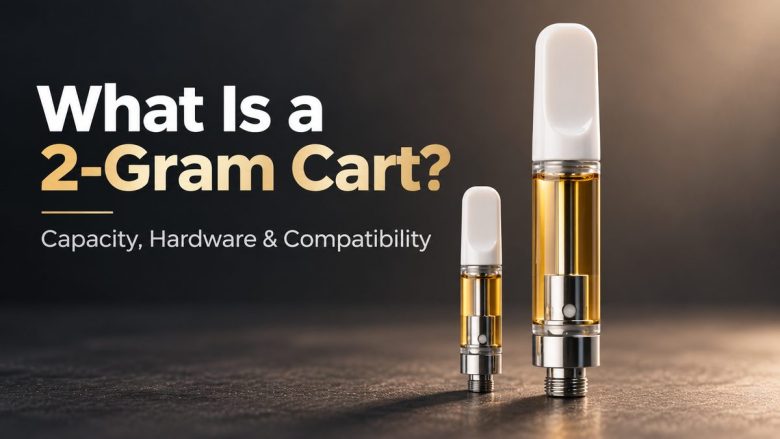
Larger vape cartridges have become more common, and “2-gram cart” is now a label you will see often. Bigger capacity sounds simple, but it changes a few practical things about hardware and use. This guide explains what a 2-gram cart actually is and what to expect from one. The focus here is capacity, compatibility, and everyday maintenance. It is written to explain the category rather than to recommend products. Where cannabinoids come up, it is only to explain how the hardware is used.
What Is a 2-Gram Cart?
A 2-gram cart is a vape cartridge typically sold with roughly two grams of oil. If you are comparing formats, a2 gram cart sits above the common 0.5-gram and 1-gram sizes many people are used to. The number refers to the amount of oil the cartridge is sold with, not how strong it is. Capacity can be labeled by weight or by volume, and those are not the same measurement. Two grams by weight does not automatically equal two milliliters, because oil density is not exactly one gram per milliliter and manufacturers label products differently. When capacity matters to you, read the stated figure on the specific cartridge rather than assuming a conversion.
Cartridge vs. Disposable Device
A cartridge and a disposable are not the same kind of device, even when both hold two grams. A cartridge is the tank portion only. It holds the oil and the heating element, and it attaches to a separate, compatible battery that you keep and reuse. A disposable is an all-in-one device. It combines the oil reservoir, the heating element, and the battery in a single sealed unit. Once the oil in a disposable is depleted, the unit is generally replaced, while a cartridge is designed to be removed from a compatible reusable battery and swapped.
510-Thread and Device Compatibility
Many cartridges use a connection called 510 threading, the screw fitting that joins the cartridge to a battery. It is the most common standard on the market, so many cartridges and batteries are cross-compatible. A larger 2-gram cartridge can still be taller or wider than a standard cart, which affects how it sits in some batteries or cases. Common is not the same as universal. Some devices use pods or proprietary fittings instead of 510 threads, so not every cartridge fits every battery. Check that a cartridge and battery are meant to work together before assuming they will.
Coils, Voltage, and Battery Capacity
A few hardware terms show up on packaging and are worth understanding in plain language. The coil, sometimes called the atomizer, is the part that heats the oil so it turns into vapor. Ceramic heating elements are common in cartridge hardware, although their exact design and performance vary between devices. Voltage describes how much power the battery sends to the coil, and some batteries let you change that level. Battery capacity is measured in mAh, a rough indicator of how much charge the battery holds. Higher voltage, higher mAh, or a ceramic coil are hardware traits, not guarantees of a better experience. What actually works well depends on how the cartridge, oil, and battery are matched. A spec that suits one setup will not always suit another.
Does a Bigger Cart Mean More Puffs?
It is tempting to assume a 2-gram cart lasts exactly twice as long as a 1-gram cart. Capacity alone cannot tell you that. A larger reservoir holds more oil, yet how far that oil goes depends on how you use it. Draw length, voltage, oil formulation, airflow, and coil design all affect how much oil each puff uses. Two people using the same cartridge can get very different amounts of use from it. Treat any fixed puff-count or lifespan figure as an estimate rather than a promise.
Clogging, Leaking, and Oil Viscosity
Clogging and leaking are common cartridge frustrations, and they usually come from a mix of factors rather than one cause. Oil viscosity plays a large role, since thicker oil flows slowly and thinner oil moves more freely. Temperature affects that viscosity, because cold can make oil stiff and heat can make it thin. Airflow and how the cartridge is stored also matter. A cartridge left on its side or upside down for a long time can let oil settle toward the mouthpiece or the airway. Storage position and exposure to temperature extremes can also affect how oil moves through cartridge hardware. These are general maintenance points, not steps for altering hardware or changing output. Careful handling covers most of what a cartridge needs.
The Takeaway
A 2-gram cart is mostly a capacity story, and that capacity touches size, compatibility, and upkeep. Knowing the difference between a cartridge and a disposable helps you set expectations. So does checking that your hardware fits together and treating specs as variables rather than rankings. None of those specs decide quality on their own. Cannabinoid rules vary by jurisdiction and continue to change, so check current federal, state and local requirements where you live.
Frequently Asked Questions
Is a 2-gram cart the same as a 2 mL cart? Not necessarily. Grams measure weight and milliliters measure volume, and oil density is not exactly one gram per milliliter. A cartridge labeled in grams may hold a slightly different volume, so read the specific product’s stated capacity. Will any 510 battery work with a 2-gram cart? Not always. 510 threading is the most common connection, but it is not universal, and some devices use pods or proprietary fittings. A larger cartridge can also be taller or wider than usual, so confirm the cartridge and battery are designed to work together. Why do larger carts sometimes clog? Clogging usually comes from several factors at once, including oil viscosity, temperature, airflow, and storage position. Thicker or cold oil flows more slowly, and a cartridge stored on its side can let oil migrate. Storage position and temperature can also influence how oil moves inside the cartridge